The first surprise is the calm. Step off the train in one of the busiest cities on earth and the platform is orderly, the carriages are spotless and nobody raises their voice. Centuries-old shrines sit within walking distance of glass towers, and a short train ride can take you from neon lit streets to quiet mountain villages.
This combination of ease and contrast is what makes Japan work as well for a first long-haul trip as it does for a repeat visit. It’s why our team builds so many tailormade holidays to Japan, for first-time and repeat visitors alike.
Why Japan Belongs on Your List
Japan is not a difficult country to visit, whatever the reputation. Public transport is exact, English signage is standard in every major station, and lost phones and bags are routinely handed in. None of that dulls the sense of difference. Wooden shrines sit beside vending machines selling hot coffee in a can, and a capsule hotel can share a postcode with a temple that has stood for five centuries.
What makes it worth the flight time is the contrast. Tokyo moves at a pace that makes London feel unhurried, yet the grounds of Meiji Shrine and the back streets of Yanaka are pockets where the noise stops. Kyoto does the opposite, a city built around slowness, where a whole afternoon in one temple garden never feels wasted.
It is also a country for every kind of traveller, whether you come for the romance of Kyoto in blossom season, a restaurant scene that has held more Michelin stars than any other city for years running, or castles and crafts that have barely changed in centuries.
The Cities: Tokyo, Kyoto and the Space Between
Most first visits are built around three or four bases, and Tokyo is nearly always the starting point. Give it more time than you think. Shibuya and Shinjuku deliver the neon, but Tokyo rewards a slower pace too, an early morning at Tsukiji Outer Market, an evening in a six-seat bar in Golden Gai.
From Tokyo, the Shinkansen makes Kyoto a little over two hours away, and the shift in pace is immediate. This is where the postcard version of Japan lives, Fushimi Inari’s thousands of vermilion torii gates climbing the hillside, the bamboo grove at Arashiyama, the geisha and maiko who still cross the streets of Gion at dusk. Nara, half an hour further on, adds a different kind of encounter entirely, hundreds of free roaming deer that bow for biscuits in the grounds of Todaiji Temple.
Osaka, often treated as an afterthought, deserves better. It is the food capital of the country, brasher and warmer than Tokyo, and a single evening wandering Dotonbori’s canal side food stalls, grilled octopus balls, skewered everything, is worth building an extra night around.
Beyond the Temples: Theme Parks, Museums and Big Days Out
Not every headline attraction in Japan is centuries old. On Tokyo Bay, Tokyo Disneyland and Tokyo DisneySea sit side by side, and DisneySea is the one to prioritise. Built around ports of call, from Venetian canals to a smoking volcano, and expanded with the Fantasy Springs area in 2024, it is the park many Disney fans rank above any other. Tickets are sold for specific dates, so book ahead.
In Osaka, Universal Studios Japan is home to Super Nintendo World, where a Mario Kart ride and a land built like a games console make it a reliable favourite with teenagers. Back in Tokyo, teamLab’s immersive digital art museums turn light and water into rooms you walk through, and film fans should plan around the Ghibli Museum in Mitaka, where advance tickets go quickly.
For a different kind of day, Himeji Castle, widely regarded as Japan’s finest original castle, is an easy Shinkansen hop from Osaka, while Hiroshima’s Peace Memorial Park and the floating torii gate at Miyajima make a moving pairing further west.
Where to Stay: From Neon Towers to Traditional Ryokans
Accommodation splits into two experiences, and the best trips include both. In Tokyo and Osaka, a smart city hotel near a station makes sense. Standards are high even at mid range, and rooms are smaller than UK travellers might expect, part of the charm rather than a drawback.
The other half is the ryokan, a traditional Japanese inn, usually found outside the biggest cities, where the experience is the accommodation rather than just somewhere to sleep. Tatami mat floors, a futon made up while you eat dinner, a multi-course kaiseki meal served in your room, and an onsen hot spring bath, either private or communal depending on the property. Hakone, within easy reach of Tokyo and with views of Mount Fuji on a clear day, is the classic first taste of ryokan life. It’s exactly the kind of finishing touch our team likes to build in, ending a trip with a luxury holiday in a ryokan.
Food, Drink and the Ritual of Eating
Food is reason enough to visit Japan. Breakfast might be grilled fish, rice and miso soup at a ryokan. Lunch is where conveyor belt sushi bars and standing soba shops earn their reputation, fast, precise and consistently good. Dinner slows down, an izakaya with a picture menu and a cold beer, or, for a special night, a kaiseki menu built around whatever is in season that week.
Drink culture runs alongside it. Highball bars serve whisky and soda with genuine ceremony, sake tasting rooms in Kyoto and Nara are worth an afternoon, and a formal tea ceremony, best booked ahead, turns out to be far more absorbing than it sounds. None of it needs to be expensive either: some of the best meals come from a station platform bento box.
When to Go: Cherry Blossom, Autumn Colour and Everything Between
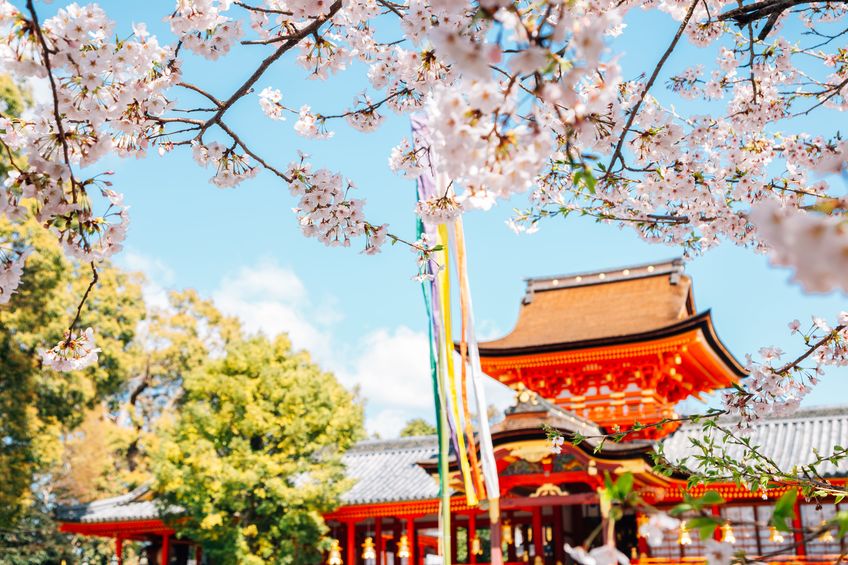
Cherry blossom season, usually the last week of March into early April, is Japan’s best known travel moment, and Kyoto hotels for peak bloom dates sell out a year ahead. Whole parks turn pink and white for roughly a week, and hanami, picnicking beneath the trees, turns the country into a shared celebration.
Autumn runs it close, and is arguably less crowded for the same visual impact. From late October through November, maple and ginkgo trees turn the temple gardens of Kyoto deep red and gold, and the mountain scenery around Nikko and the Japanese Alps is at its most dramatic.
Outside these two windows, late spring and early autumn both offer comfortable temperatures without the crowds, and winter brings its own appeal in the north, powder snow skiing in Hokkaido and hot spring baths in Nagano where you can watch the local snow monkeys bathe. Summer, hot and humid, is best avoided.
Getting There and Getting Around
Direct flights run from the UK to Tokyo in around fourteen hours, with connections via hubs such as Doha and Dubai that can be better value depending on dates. We always recommend building in a day to recover before the itinerary starts properly.
Once there, the rail network does almost all of the work. A Japan Rail Pass, best bought before departure, covers most Shinkansen services and local JR lines, though not the fastest Nozomi and Mizuho trains. Whether it beats individual tickets depends on your route. Trains run to the minute, platforms are signed in English, and reserved seats can be booked well ahead for peak season.
This is exactly the kind of route where a bit of expert planning earns its keep, working out which cities justify a base and where the rail pass makes sense against point to point tickets. It’s the reason our tailormade holidays to Japan tend to start with a proper planning conversation rather than a brochure. For travellers who would rather have someone else handle the logistics, small group operators such as Wendy Wu Tours run escorted itineraries across Japan that remain popular with UK travellers.
Who a Japan Holiday Suits
Japan works for a wider range of travellers than its bucket list reputation suggests. Couples can build a genuinely romantic itinerary around blossom season, a ryokan night and a handful of exceptional meals, while first-time long-haul travellers often find it less daunting than expected because transport, signage and safety are so straightforward.
Families with older children or teenagers do well here too, with theme parks, arcades and bullet trains alongside the temples. For retired and over-55s travellers, an escorted small group tour removes almost all of the logistics while keeping the cultural depth Japan is known for.
Solo travellers, too, find Japan unusually comfortable, safety and an organised transport network make independent exploration genuinely relaxed.
How Admiral & Craig Travel Can Help
Planning a first trip to Japan can feel like a lot to arrange alone, working out which cities deserve two nights and which deserve four, or whether a rail pass makes sense for your route. This is exactly where our team comes in. We build tailormade holidays from scratch, drawing on direct relationships with specialist Japan operators, and we work with escorted tour partners including Wendy Wu Tours for anyone who would rather travel in a small group with everything arranged.
Whether you are picturing two weeks taking in Tokyo, Kyoto and Osaka, or a shorter city break with an onsen night built in, we can put together tailormade holidays that fit your dates, budget and pace, all fully ABTA and ATOL protected. Call in and speak to your nearest Admiral or Craig Travel team, from Altrincham to Kendal, to get started.
FAQ’S
Most first-time visitors do well with ten to fourteen nights, enough for Tokyo, Kyoto and one or two additional stops without feeling rushed. Shorter trips of seven or eight nights work if you focus on just Tokyo and Kyoto.
English signage is standard on trains and in most stations, and menus in tourist areas increasingly come with pictures or English translations. A few basic phrases go a long way and are always appreciated, but they are not essential.
It depends on your route. It covers most Shinkansen services and local JR lines, though not the fastest Nozomi and Mizuho trains, and can work out better value than individual tickets on multi-city itineraries. Our team can work out the sums for your specific plan.
Late March into early April for cherry blossom, or late October into November for autumn colour, are the two most popular windows and should be booked well ahead. Outside of summer’s heat and humidity, most of the year offers a good trip, which is one of the reasons our team builds so many tailormade holidays to Japan.
Yes, particularly with older children and teenagers. Tokyo Disney Resort and Universal Studios Japan sit comfortably alongside temples and bullet trains, and Japan’s safety and easy transport make travelling as a family straightforward.
Ready to Start Planning?
Ready to start planning your own trip to Japan? Our team at Admiral & Craig Travel would love to help. Call us on [branch number], pop into your nearest branch from Altrincham to Kendal, or visit admiraltravel.co.uk to explore our long-haul options. We have built tailormade holidays to Japan for couples, families and solo travellers alike, and every booking is fully ABTA and ATOL protected, so you can look forward to the trip knowing everything is taken care of.